How to Choose the Best PCR Machine for Your Lab: Key Factors to Consider
Just another WordPress site
Press Release Disclaimer: This is a press release distributed through the XPR Media network. It has not been independently verified by our newsroom.

Shanghai, China-September 17, 2026
Choosing the right Pcr Machine isn’t just about picking the priciest model out there. It’s more about finding a device that fits the specific needs of your daily work in the lab. For example, a clinical lab might be really focused on things like temperature consistency, preventing contamination, and having workflows that are already validated. On the other hand, a research team might be looking for more flexibility in cycling protocols, higher throughput, or sharper fluorescence detection. In the end, the best choice starts right at your bench—way before you even glance at a flashy sales brochure.Industry reports back this up, showing why it’s such a big deal. According to Grand View Research, the global PCR market is still growing steadily, fueled by molecular diagnostics, biotech innovations, and research pursuits. MarketsandMarkets highlights that areas like real-time PCR, digital PCR, and automated systems are rapidly expanding. While all this growth sounds promising, remember—just because the market’s booming doesn’t mean every instrument will suit your specific lab needs. Sometimes it’s the little details that get overlooked.A practical approach? Take a close look at things like temperature accuracy, ramp speed, block capacity, compatibility with Pcr Wells, ease of software use, support from the vendor, and the costs for consumables. It’s crucial to see how the machine performs over multiple runs—not just during a demo. Don’t forget to ask if the vendor can provide calibration records, tech manuals, and quick support if something goes wrong. Big names like Thermo Fisher, Bio-Rad, and Roche are well-known, but remember—brand reputation alone shouldn’t be the deciding factor.Honestly, the real differences tend to pop up toward the end of a long day. An experienced user will also test things like how well the plates seal, the consistency of edge wells, how easy it is to export data, and whether the system can recover protocols after a power outage. These little details really matter—they can impact reproducibility and might reveal weaknesses hidden in the specs. No system is perfect, and your needs might shift over time, depending on your budget, training, sample volume, or future methods you want to try.So, take your time, compare what you see against real evidence, be skeptical of shiny promises, and pick a PCR system that you can rely on—even after the initial excitement wears off.
Define PCR Application: Endpoint, qPCR, HRM, or Digital PCR
Choosing the best Pcr Machine starts with defining the application, not comparing specifications alone. Endpoint PCR suits presence-or-absence testing, such as checking a target band after amplification. A reliablePlate Pcr workflow should provide even heating, stable temperature control, and enough wells for your daily sample load. Confirm that the instrument supports your preferred plate format and sealing method.
For qPCR, prioritize optical sensitivity, consistent fluorescence readings, and flexible dye compatibility. HRM requires excellent temperature uniformity and fine data resolution. Small thermal differences can blur melting curves. Digital PCR needs accurate partitioning, droplet or chamber control, and software that reports confidence intervals clearly. I have seen laboratories choose advanced systems before confirming their sample volume. That mistake created unnecessary costs and slower training.
Tips: Test the machine with real samples before purchase. Ask for raw data, not only attractive graphs. Check calibration records and local technical support. Leave room for future assays, but do not pay for functions your team will never use. A short pilot run can reveal weaknesses in workflow, software, and daily maintenance. Some choices still involve compromise; speed, sensitivity, and budget rarely peak together.
Match qPCR Validation to MIQE: 90–110% Efficiency and R² ≥0.98
Choosing a Pcr Machine should begin with validation, not screen size or sales claims. The MIQE guidelines recommend 90–110% amplification efficiency for quantitative PCR (Bustin et al., Clinical Chemistry, 2009). This equals a standard-curve slope of about −3.58 to −3.10. A reliable instrument must support stable temperatures, consistent optical readings, and accurate baseline correction across wells.Build a five-point dilution series with technical replicates. Check efficiency, R², replicate variation, melt curves, and no-template controls. Set R² at ≥0.98, but do not treat it as proof of quality. A high R² can hide poor pipetting or inhibition. That mistake is common. The instrument should export raw fluorescence data and preserve analysis settings for auditability. MIQE also stresses reporting Sample Handling, primer information, controls, and acceptance criteria. The RDML reporting standard further supports transparent data exchange (Lefever et al., Clinical Chemistry, 2013).Before purchase, request a validation run using your actual assay chemistry. Compare edge wells with center wells. Watch for baseline drift after long runs. Test low-copy samples, too. A machine may pass a vendor demonstration but perform differently in a crowded laboratory. The honest choice may involve slower throughput and stronger calibration support. That trade-off is worth examining. Regular optical and thermal verification should be included in the laboratory quality plan, with results documented against the 90–110% and R² ≥0.98 targets.
Compare Thermal Control: 95–100°C Denaturation and ±0.5°C Uniformity
Choosing the best Pcr Machine starts with thermal control, not screen size or software features. Denaturation usually occurs between 95 and 100°C, where double-stranded DNA separates. The selected temperature should match your polymerase and protocol. A machine reaching 100°C is not automatically better. Excess heat may increase evaporation or stress sensitive reagents.Uniformity matters just as much. A specification of ±0.5°C means wells should remain closely matched across the block. This reduces differences between samples, especially in gradients, standard curves, and low-copy assays. During validation, place control tubes at the center and edge positions. Measure actual temperatures with a calibrated probe when possible. If edge wells behave differently, the instrument may need careful compensation or restricted loading. This practical check is often skipped.Tips: Run a small plate map before routine use. Compare Ct values from corner and center wells. For Strip Pcr workflows, check whether the block grips strips evenly and supports consistent contact. Also inspect the heated lid, because poor pressure can cause evaporation. Keep records of calibration dates and failed runs. I once trusted a uniformity claim without testing our own tubes. The results were acceptable, but not convincing. A second test exposed a handling issue rather than a machine fault. That distinction matters.
Size Throughput: 96- vs 384-Well Blocks and 10–20 µL Reactions
Choosing between 96- and 384-well PCR blocks depends on your daily workload, not only maximum capacity. A 96-well block suits small studies, clinical verification, and frequent assay changes. It also leaves more space around each reaction. A 384-well block can process four times as many positions in one run, but it demands disciplined plate mapping and Liquid Handling. One mistake can spread across hundreds of wells. Expensive, quickly.Reaction volume changes the calculation. At 10–20 µL, each well uses less reagent and supports higher sample throughput. However, small volumes evaporate faster and magnify pipetting variation. The MIQE guidelines require researchers to report reaction volume, replicates, controls, and quality criteria, because these details influence reproducibility. The Clinical and Laboratory Standards Institute also emphasizes validated precision across the intended measuring range. These are not decorative requirements.Market data shows why compact, high-throughput systems attract attention. Grand View Research estimated the global PCR market at approximately USD 10 billion in 2023, with continued growth driven by molecular testing and research demand. Still, market growth does not prove that a 384-well instrument fits your lab. Review your real batch size, technician skill, plate-sealing process, and acceptable failure rate. A 96-well system may be slower on paper, yet more reliable when runs remain partly filled. Test both formats with 10 and 20 µL reactions before purchasing. Your first comparison may expose an inconvenient truth.
Check Optics: 4–6 Channels, Multiplex Dyes, and Cq Precision
How to Choose the Best Pcr Machine for Your LabOptics should guide your Pcr Machine choice, not just its advertised speed. A system with four to six optical channels can support multiplex assays across several fluorescent dyes. However, channel count alone proves little. Check the machine’s spectral separation, emission filters, and resistance to optical cross-talk. Closely spaced dye spectra may create false signal increases. Ask for validation data from multiplex reactions, not only single-dye tests. YourPcr Tubes and reaction volume also affect fluorescence consistency, especially when the liquid sits below the optical detection zone. Small details matter.Cq precision deserves equal attention. Compare replicate wells using the same master mix, template concentration, and sealing method. A reliable instrument should produce tight Cq clustering across the plate. Review variation near the detection limit, where noise becomes more visible. Examine raw amplification curves, baseline settings, and melt data when available. Some systems report polished numbers that hide unstable curves. That deserves caution. I would also test several Pcr Tubes lots, because plastic clarity and wall thickness can influence readings. This step is easy to skip. It should not be. A practical evaluation may reveal that a six-channel instrument adds little value for your current assays, while better calibration improves everyday results. Reassess your dye panel, controls, and future multiplex plans before paying for unused optical capacity.
How to Choose the Best PCR Machine for Your Lab: Check Optics, Multiplex Dyes, and Cq Precision
| Selection Criterion | 4-Channel Configuration | 5-Channel Configuration | 6-Channel Configuration | Why It Matters |
|---|---|---|---|---|
| Typical optical capacity | 4 channelsSupports four independently detected fluorescence bands. | 5 channelsAdds one spectral channel for broader multiplex assay design. | 6 channelsProvides the greatest flexibility for high-plex and internal-control workflows. | More optical channels allow more targets or controls to be measured in a single reaction, provided the assay is properly validated. |
| Common dye coverage | FAM, HEX or VIC, Texas Red or ROX, and Cy5. | FAM, HEX or VIC, Texas Red or ROX, Cy5, and a fifth far-red or orange-red dye. | FAM, HEX or VIC, Texas Red or ROX, Cy5, Cy5.5, plus an additional validated dye. | Actual dye compatibility depends on the instrument’s excitation sources, emission filters, and analysis software—not channel count alone. |
| Typical spectral regions | Approximately 470–670 nm emission coverage, normally divided into four detection bands. | Approximately 470–700 nm emission coverage, normally divided into five detection bands. | Approximately 470–720 nm emission coverage, normally divided into six detection bands. | Wider spectral coverage can reduce the need to redesign assays when additional targets or controls are introduced. |
| Recommended multiplex level | 2–4 fluorophores per reaction, depending on assay design and signal separation. | 3–5 fluorophores per reaction, with compensation and singleplex controls. | 4–6 fluorophores per reaction, with rigorous spectral compensation and validation. | Multiplex capacity is limited by fluorescence overlap, primer interactions, probe efficiency, and the dynamic range of each target. |
| Optical cross-talk control | Spectral compensation is recommended when dyes have overlapping emission profiles, especially in adjacent channels. | Requires single-color controls and a compensation matrix for reliable separation of neighboring dye signals. | Requires single-color controls, compensation, and careful selection of dyes with sufficiently separated emission maxima. | Without compensation, signal from a strong target may be incorrectly assigned to a neighboring channel and distort Cq values. |
| Within-run Cq precision target | ≤0.25 Cq standard deviation for replicate wells in a well-optimized assay. | ≤0.25 Cq standard deviation for replicate wells in a well-optimized assay. | ≤0.25 Cq standard deviation for replicate wells in a well-optimized assay. | Cq precision is influenced by pipetting, template quality, threshold settings, baseline correction, and assay efficiency—not optics alone. |
| Between-run Cq reproducibility target | Approximately ≤0.5 Cq difference under controlled conditions using the same assay and reference material. | Approximately ≤0.5 Cq difference under controlled conditions using the same assay and reference material. | Approximately ≤0.5 Cq difference under controlled conditions using the same assay and reference material. | Use a stable reference sample and identical analysis settings when comparing runs, instruments, or operators. |
| Temperature uniformity target | Around ±0.3 °C across the block is a useful performance benchmark. | Around ±0.3 °C across the block is a useful performance benchmark. | Around ±0.3 °C across the block is a useful performance benchmark. | Uniform temperature helps reduce well-to-well variation in amplification efficiency and Cq measurements. |
| Ramp-rate consideration | Typical maximum heating rates are approximately 3–5 °C per second; practical cycle time depends on the protocol. | Typical maximum heating rates are approximately 3–5 °C per second; practical cycle time depends on the protocol. | Typical maximum heating rates are approximately 3–5 °C per second; practical cycle time depends on the protocol. | Fast ramping can shorten run time, but reaction chemistry and data quality should take priority over maximum advertised speed. |
| Best fit for laboratory use | Routine singleplex assays, duplex assays, genotyping, and laboratories with a limited number of targets. | Moderate multiplexing, pathogen panels, gene-expression assays, and workflows using several internal controls. | High-plex research panels, multiplex pathogen detection, variant analysis, and complex assay development. | Choose the lowest channel count that supports current needs while leaving sufficient capacity for planned assay expansion. |
| Minimum validation package | No-template controls, positive controls, standard curves, replicate wells, and singleplex comparison for multiplex assays. | All 4-channel requirements plus single-color controls and spectral compensation verification. | All 5-channel requirements plus dye-interference testing across the full panel and confirmation of low-abundance targets. | A higher channel count does not replace analytical validation; every dye combination should be tested in the intended reaction matrix. |
Note: The values shown are practical selection benchmarks and typical performance targets for real-time PCR workflows. Exact specifications vary by instrument design, consumables, chemistry, calibration status, assay composition, and data-analysis settings. Always confirm dye compatibility, optical specifications, temperature performance, and Cq reproducibility using the manufacturer’s technical documentation and laboratory validation data.
Verify Compliance and Ownership: ISO 13485, 21 CFR Part 11, 5-Year TCO
Choosing the best PCR machine for your lab requires more than comparing temperature ranges and sample capacity. In regulated settings, verify ISO 13485 documentation before purchase. Ask for the certificate scope, current status, and supporting quality records. A polished certificate alone is not enough. Review supplier change control, complaint handling, and service procedures. These details reveal how the equipment may perform after installation.For electronic records, confirm 21 CFR Part 11 capabilities during a live demonstration. Check user permissions, audit trails, electronic signatures, data export, and secure backups. Create a test run using a Pcr Strip and intentionally enter an incorrect result. The system should record the change without deleting the original entry. Also ask how software updates affect validation. I would not assume compliance from a sales presentation. Real workflows can expose gaps.Calculate the five-year total cost of ownership before approving the budget. Include purchase price, installation, qualification, calibration, service contracts, training, consumables, energy use, and downtime. A lower initial quote may become expensive when repairs require external technicians. Estimate the cost of failed runs and delayed reports. Record warranty limits in writing. Some costs remain uncertain. That uncertainty deserves a contingency allowance. Compare replacement parts, preventive maintenance intervals, and data-retention requirements across shortlisted systems. A practical spreadsheet should show yearly costs, not just the first invoice.
How to Choose the Best PCR Machine for Your Lab
Five-year total cost of ownership (TCO) planning model comparing common laboratory profiles. Compliance readiness should be verified through supplier documentation: ISO 13485 relates to the quality management system, while 21 CFR Part 11 concerns electronic records and electronic signatures.
Planning assumptions: costs are shown in USD and include instrument acquisition, five years of service, qualification and validation activities, software or data-integrity controls, and routine accessories. Actual costs vary by configuration, usage, region, and service contract.
Choosing High-Quality DNase/RNase-Free 0.1 mL and 0.2 mL 96-Well PCR Plates from China Suppliers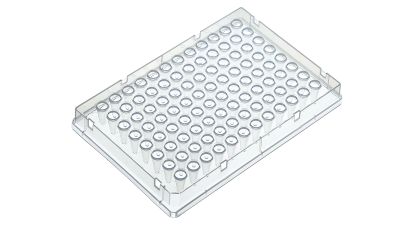
High-Quality 0.1ml/0.2ml 96-Well PCR Plates from China Suppliers and Factory – DNase/RNase Free
Choosing high-quality DNase/RNase-free 0.1 mL and 0.2 mL 96-well PCR plates from reliable China suppliers is essential for maintaining accuracy and consistency in laboratory workflows. Made from virgin polypropylene, these plates provide excellent chemical resistance, thermal stability, and compatibility with routine PCR and qPCR applications. Available in both 0.1 mL and 0.2 mL formats, they can be selected according to instrument requirements and reaction volume. Full-skirt and no-skirt designs offer flexibility for different thermal cyclers, sealing methods, and handling preferences.Manufactured in a Class 100,000 cleanroom, the plates are produced to meet stringent cleanliness requirements, including DNase-free, RNase-free, and endotoxin-safe standards. Each plate skirt is clearly marked with numbers, helping researchers locate wells quickly and add samples with greater precision. When evaluating China suppliers and factories, laboratories should consider material quality, dimensional consistency, cleanroom production, certification, and dependable quality control. These features support reliable sample processing and help reduce the risk of contamination during sensitive molecular biology experiments.
Conclusion
Choosing the right Pcr machine begins with defining your laboratory’s primary application, whether endpoint PCR, qPCR, high-resolution melting, or digital PCR. For qPCR workflows, validation should align with MIQE principles, including amplification efficiency of approximately 90–110% and an R² value of at least 0.98. Thermal performance is equally important: the system should support reliable denaturation at 95–100°C and maintain temperature uniformity within about ±0.5°C to improve reproducibility.Next, match throughput to daily sample volume by comparing 96-well and 384-well formats, while confirming compatibility with practical reaction volumes such as 10–20 µL. Optical specifications should include four to six detection channels, support for common multiplex dyes, and dependable Cq precision. Finally, evaluate documentation, compliance, software security, and long-term ownership costs, including ISO 13485, 21 CFR Part 11, maintenance, service, and an estimated five-year total cost of ownership.
About us
Specializing in molecular diagnostics, GEB offers end – to – end solutions, covering every aspect from sample preparation to precise testing. Supported by an internationally leading R&D team, GEB’s products have a wide range of applications, serving sectors such as agriculture, food safety and health, pet healthcare, and public health. These products empower global customers to effectively overcome various biosafety challenges they encounter.
Media Contact
Company Name: Shanghai Gene Era Bio-Science Co.,Ltd.
Contact Person: Media Relations
Email: Send Email
Country: China
Website: https://www.gebioscience.com/
Press Release Distributed by ABNewswire.com
To view the original version on ABNewswire visit: How to Choose the Best PCR Machine for Your Lab: Key Factors to Consider